

I’ve been served court papers.
Being served means a case has started, not that anything has been decided. The papers say what the other parent is asking the court for, when the court will first look at it, and how you respond. Read every page, write down the dates, and don’t reply in anger: the first week is about getting your facts in order.
If a child or anyone is in danger now, call 999 (UK), 112 (Ireland), 000 (Australia), 911 (US and Canada) or 111 (New Zealand).
Read your papers
Every set of papers answers the same few questions.
Tap each part of these sample papers to see what it tells you. Yours will look different, but the same things are in there.
Sample. Names and dates are fictional.
General information, checked against official rules and court guidance on 2 October 2026. Your papers and your court’s office are the final word on your case. The rules in their own words ↓
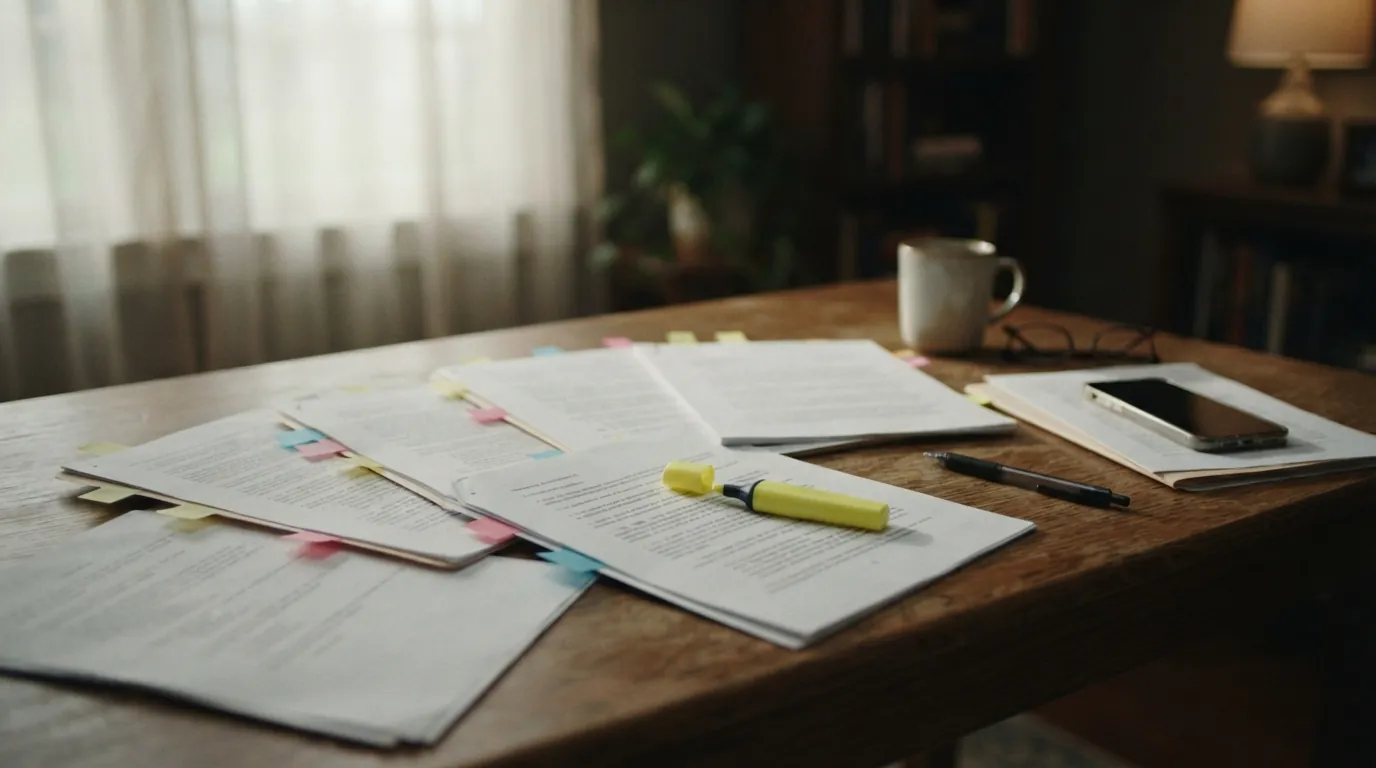
The first 7 days
One week, one step a day.
You don’t need to do everything at once. You need to do the right things in the right order, and keep a copy of everything.
- Day 1Read every page, twice.Then put it down. Don’t message the other parent about it today: anything you send now can be put in front of the court.
- Day 1Write down the dates.The day you were served, the hearing date, and the time the papers give you to respond. Put them where you’ll see them every day.
- Day 2Start one folder.The papers, complete and in order. A copy you can write on. Any order or agreement you already have.
- Day 3Number their points.Go through what they say, one point at a time. Next to each: agree, don’t agree, or partly, and which of your papers shows it.
- Day 4Gather your papers.The whole message history, school and doctor letters, the arrangement you had, your own dated notes. Complete records are easier to check.
- Day 5Get help with one task.A free advice service, your court’s self-help or information centre, or a lawyer for one fixed-fee job, such as checking your response before you file it.
- Days 6–7Prepare your response.On your court’s official form, in plain facts, point by point (in Ireland’s District Court there’s no form: you go to the hearing). Keep a copy of what you file and proof of when you filed and served it.
If any date in your papers is close, start with that, and ask the court office what applies to you.
Free tool
Turn the hearing date into a plan.
Enter the hearing date from your papers. You’ll get what to do four weeks out, two weeks, one week, two days, the night before and on the day, and you can add it all to your calendar. It runs in this browser; nothing you enter is sent anywhere.
It plans your preparation; it doesn’t work out legal time limits. Those are in your papers and your court’s rules. More free tools →
See it in the app
Their statement, set against your papers.
- Add their papers, and yours.Their application and statement, your messages and letters. Before the language model reads a word, names become tags.
- It spots what doesn’t add up.“Missed without notice” in their statement; a cancellation message the evening before in yours. Both quoted, with their pages.
- It quotes the law where you live. Coming in early accessThe sections that apply to your case, in the law’s own words, with a link to the official text. Change the country above and it changes too.
- It prepares your response, point by point.Each paragraph of their statement, with what your papers show. Marked draft: the words are yours, on the court’s own form.
Sample case. Names and papers are fictional.

What the rules say
The rules, in their own words.
Five questions everyone asks in their first week, answered only from the court rules and the courts’ own guidance: the passage that answers it highlighted, and a link to the official text.
Quoted from the official rules and court guidance. It isn’t advice about your case, and rules change: check the official site. Court procedure is set by each US state and each Canadian province; California and Ontario are shown as examples.
Questions people ask
The questions that keep you up at night.
Do I have to respond to court papers?
If you don’t, the case can go ahead without you: the court rules or official guidance in every country here say so. How you respond differs: most courts have a written response form, while in Ireland’s District Court you respond by going to the hearing on the date in the Notice.
Can I ask for more time?
Ask the court office how to ask for more time in your court, and ask as early as you can. Don’t assume you’ll get it, and keep preparing while you wait.
Should I contact my ex about the papers?
If you need to, keep it short, calm and about the children. Messages sent now can be put in front of the court. Don’t discuss the case with your child, or ask them to pass messages.
What if what they say isn’t true?
Say so in your response, point by point and calmly, and show the paper that supports each point: a message, a school letter, a dated record. Courts decide on evidence, so a dated account with its sources does more than a strong word.
The papers raise abuse or safety concerns. What now?
Take it seriously and get legal advice quickly. Courts have their own forms for this, such as form C1A in England and Wales and the Notice of Child Abuse, Family Violence or Risk in Australia. If anyone is in danger, call emergency services.
Do I need a lawyer to respond?
You don’t have to have one: you can respond yourself, on the court’s official form. Getting advice, even once, is worth it if you can, and many people get help with one task: a lawyer checks the response before it’s filed, for a fixed fee. Ask for “limited scope” or “unbundled” help. Court self-help centres and free advice services can explain the forms.
You’re not alone
You don’t have to do this alone.
Legal aid isn’t available to everyone, so many parents do some or all of this themselves. Free and low-cost help exists: check whether you qualify, and get advice where it counts.
Showing help for England & Wales. Change it with “Where you live” above.
“I built this after going through it myself.” — Andrew, founder
With a lawyer or without one, walk in with your papers in order.
PROVEAiBLE reads your papers, sets out the facts with their pages, shows where the papers disagree, quotes the law for where you live, and prepares your papers for the hearing. It never tells you which legal step to take, or how it will turn out. Law for more countries: coming in early access
Sources, checked 2 October 2026
- England & Wales: Family Procedure Rules, Part 12 and Part 27; Practice Direction 12B; gov.uk, get help and support
- Ireland: District Court Rules, Order 58; courts.ie, responding to a children’s court application; courts.ie, legal advice
- Australia: Federal Circuit and Family Court of Australia (Family Law) Rules 2021; Central Practice Direction; fcfcoa.gov.au, I have been served
- United States: California Rules of Court, rule 5.92; Code of Civil Procedure s1005; Family Code s3170; California Courts self-help
- Canada: Ontario Family Law Rules; Ontario, guide to procedures in family court
- New Zealand: Family Court Rules 2002; Ministry of Justice, respond to a notice of application
General information, not legal advice. Rules and court processes change; check the official pages and your own papers before you act.